
Signs & Symptoms
Recognizing myopia early helps children get the care they need sooner
Many children with myopia (nearsightedness) don't realize their vision is different from what others see. They may assume that blurry distant objects are normal, or they may not know how to explain what they're experiencing. That's why it's so important for parents, teachers, and caregivers to know the warning signs. Myopia usually begins in childhood, often between ages 8 and 12, though it can start earlier or later. The earlier myopia is detected, the earlier families can talk with an eye care professional about next steps—whether that's glasses for clear vision, lifestyle changes, or treatments that may help slow progression. This page will help you recognize the signs of myopia in children at home, at school, and during activities. Remember: this information is educational only and not a substitute for a comprehensive eye exam by a licensed optometrist or ophthalmologist.
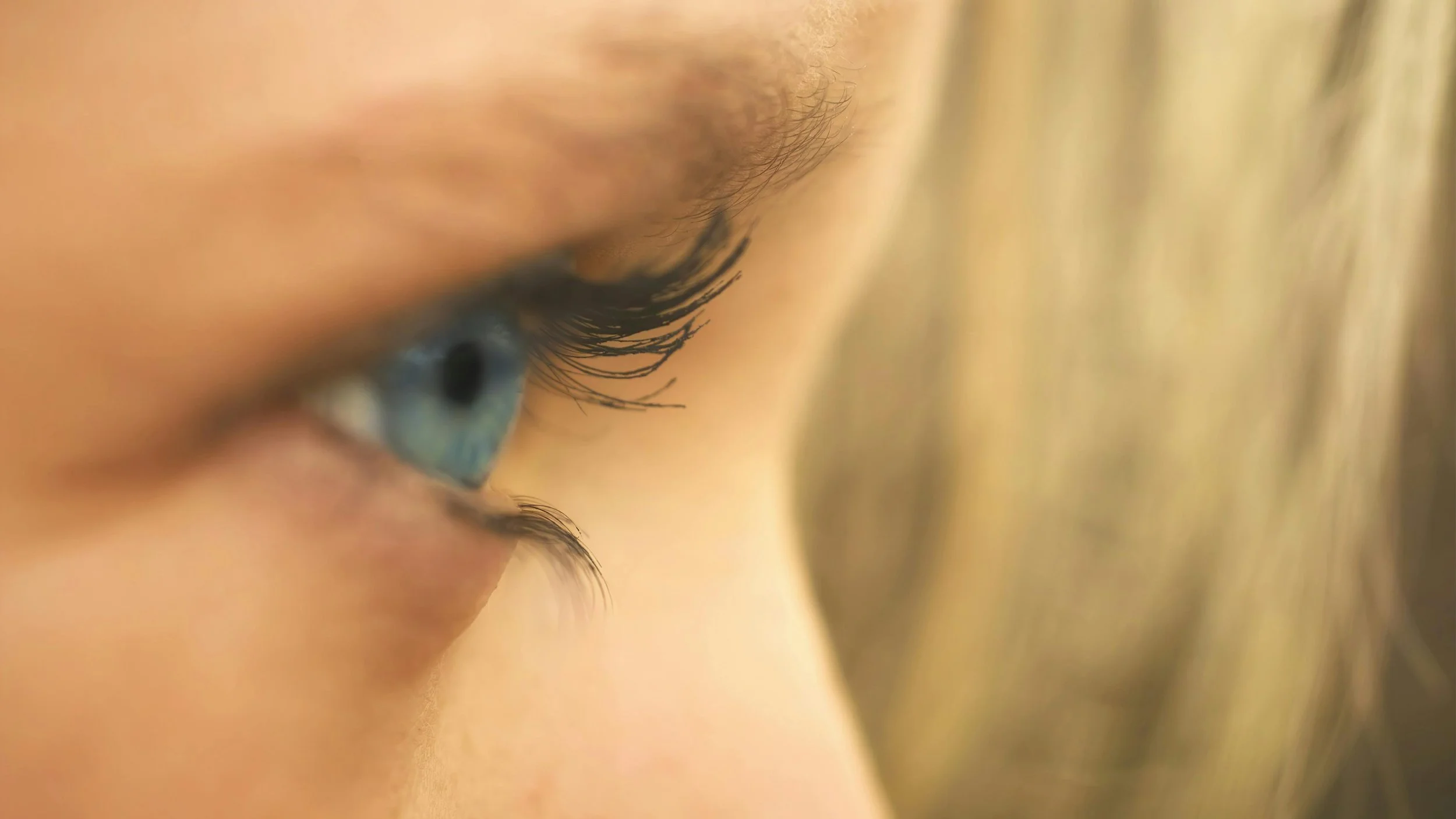
THE MAIN SYMPTOM OF MYOPIA
Blurred vision when looking at distant objects. Children with myopia can usually see things up close clearly—like books, phones, or homework on their desk. But distant objects look blurry or fuzzy.
Examples of what may look blurry:
The classroom board or smartboard
Road signs while riding in a car
Friends' faces across the playground
Scoreboards at sports games
TV screens from across the room
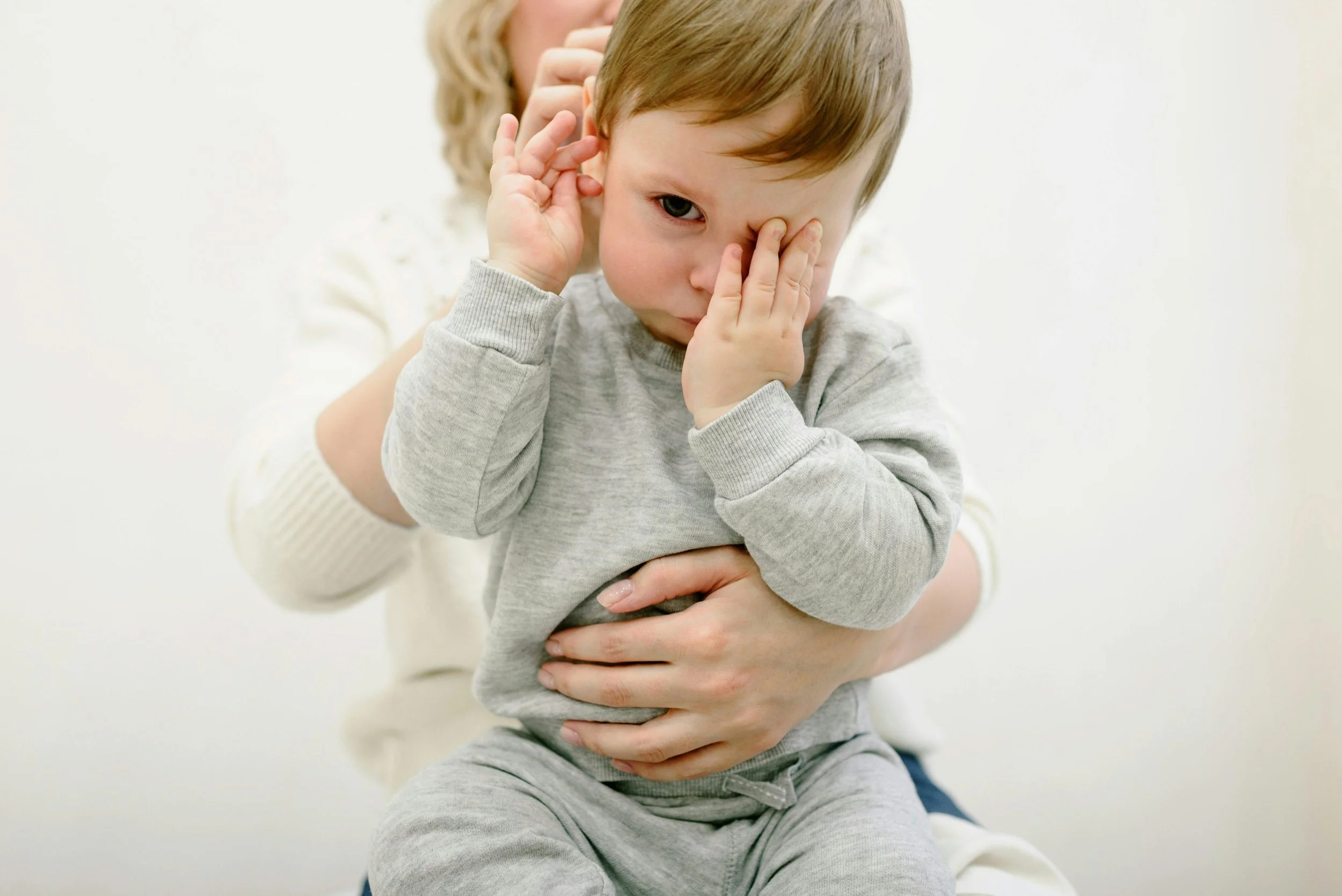
WARNING SIGNS TO WATCH FOR
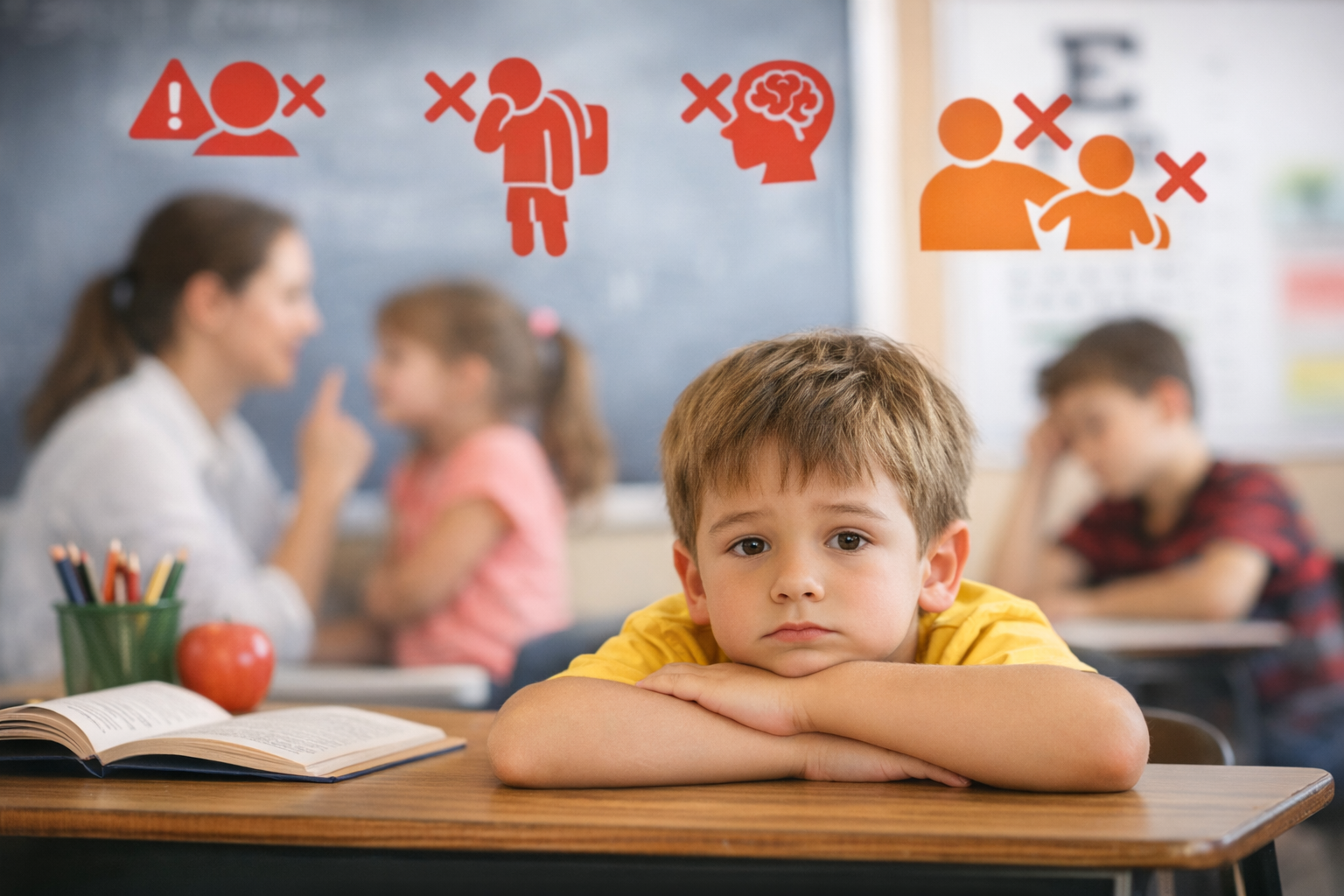
Because children often don't complain about blurry vision, these behavioral signs can help you spot myopia early
of Blur
Eyestrain
Sports
When Reading
Squinting or Narrowing Eyes
Squinting temporarily helps focus blurry vision, so children with myopia often squint to see distant objects more clearly. You might notice this when your child is trying to read the classroom board, watch TV from across the room, or see signs while riding in a car.
Frequent Headaches or Eyestrain
Straining to see distant objects can cause headaches or tired eyes. If your child rubs their eyes frequently, complains of headaches during or after school, or seems fatigued after visual tasks, it could be related to uncorrected myopia.
Sitting Very Close to Screens or Boards
If your child consistently sits very close to the TV, moves closer to the classroom board, or holds tablets and phones unusually close, it may be because distant viewing is blurry. They naturally move closer to see more clearly.
Difficulty with Sports or Outdoor Activities
Myopia can make it hard to see a ball coming, judge distances, or track fast-moving objects during sports. Children might struggle in activities like baseball, soccer, or basketball—not because they lack skill, but because they can't see clearly.
Complaining That Things Look Fuzzy or Blurry
Older children who can describe what they see might say that the board at school looks "fuzzy," that road signs are "blurry," or that they can't see what the teacher is writing. Younger children might not use these words but may say they "can't see."
Holding Books Very Close or Losing Place When Copying
While myopia affects distance vision (not close-up), some children hold books very close out of habit, or they may lose their place when trying to copy from a distant board to their paper because the board text is blurry.
CALLOUTS
FOR STUDENTS
You might not realize your vision is blurry if you've always seen this way. You might think everyone sees the board the same way you do. If any of these sound familiar, talk to a parent or teacher:
You squint to see what's on the board
Your eyes feel tired at school
Distant things look fuzzy but your desk work looks clear
You have trouble seeing in sports
It's not your fault, and it's very common—an eye exam can help!
FOR TEACHERS
Teachers often spend more time observing children's visual behaviors than anyone else. Here's what educators might notice in students with undetected myopia:
• Squint frequently when looking at the board or screen
• Move to the front of the classroom to see better
• Copy notes incorrectly from the board (letters or numbers wrong)
• Seem distracted or disengaged during lessons that use visual aids
• Complain of tired eyes or headaches, especially in the afternoon
• Struggle with activities that require seeing across the room
• Lose interest in subjects where they can't see the materials clearly
• Have difficulty reading information posted on classroom walls
These signs don't mean a child isn't trying—they might simply mean the child can't see clearly enough to participate fully.
FOR PARENTS
What Parents May Notice at Home:
Sitting very close to the TV or computer screen
• Holding phones or tablets unusually close to their face
• Squinting when looking out the window or across the room
• Difficulty recognizing people from a distance (like across a park)
• Complaining that street signs or store signs are hard to read
• Rubbing eyes frequently, especially after homework or screen time
• Avoiding activities that require distance vision (like catching a ball)
• Seeming frustrated or tired during activities other kids enjoy
These signs don't mean a child isn't trying—they might simply mean the child can't see clearly enough to participate fully.
AGES 3-5
Close to TV
Rubbing eyes
Bumping into things
Not recognizing faces
AGE-SPECIFIC SIGNS
AGES 6-12
Squinting at board at school
Struggling to copy from board
Headaches during or after school
Trouble in sports
Holding books very close
AGES 13-18
Complaining about blurry distance
Difficulty driving or learning
Eyestrain after study sessions
Preferring close-up tasks
WHAT MYOPIA IS NOT
If your child shows these signs, it does NOT mean:
❌ They're not paying attention on purpose
❌ They're being lazy or difficult
❌ They have a learning disability
❌ They're trying to get out of activities
❌ There's something seriously wrong
It often simply means their eyes need help focusing on distant objects—and that's something an eye exam and glasses (or other options) can address. Many children with myopia are bright, engaged, and eager to learn—they just need to see clearly to do their best.
WHEN TO SEEK HELP
You don't need to wait for obvious signs to schedule an eye exam. Regular comprehensive eye exams are important for all children.
Your child shows any of the warning signs listed above
Your child complains about blurry vision, even occasionally
Teachers or coaches mention your child might have trouble seeing
You notice squinting, eye rubbing, or headaches ✓
Your child avoids activities they used to enjoy
Your child is between ages 3-5 and hasn't had a first eye exam yet
Your child is school-age and hasn't had an exam in the past year
There's a family history of myopia (parents or siblings are nearsighted)
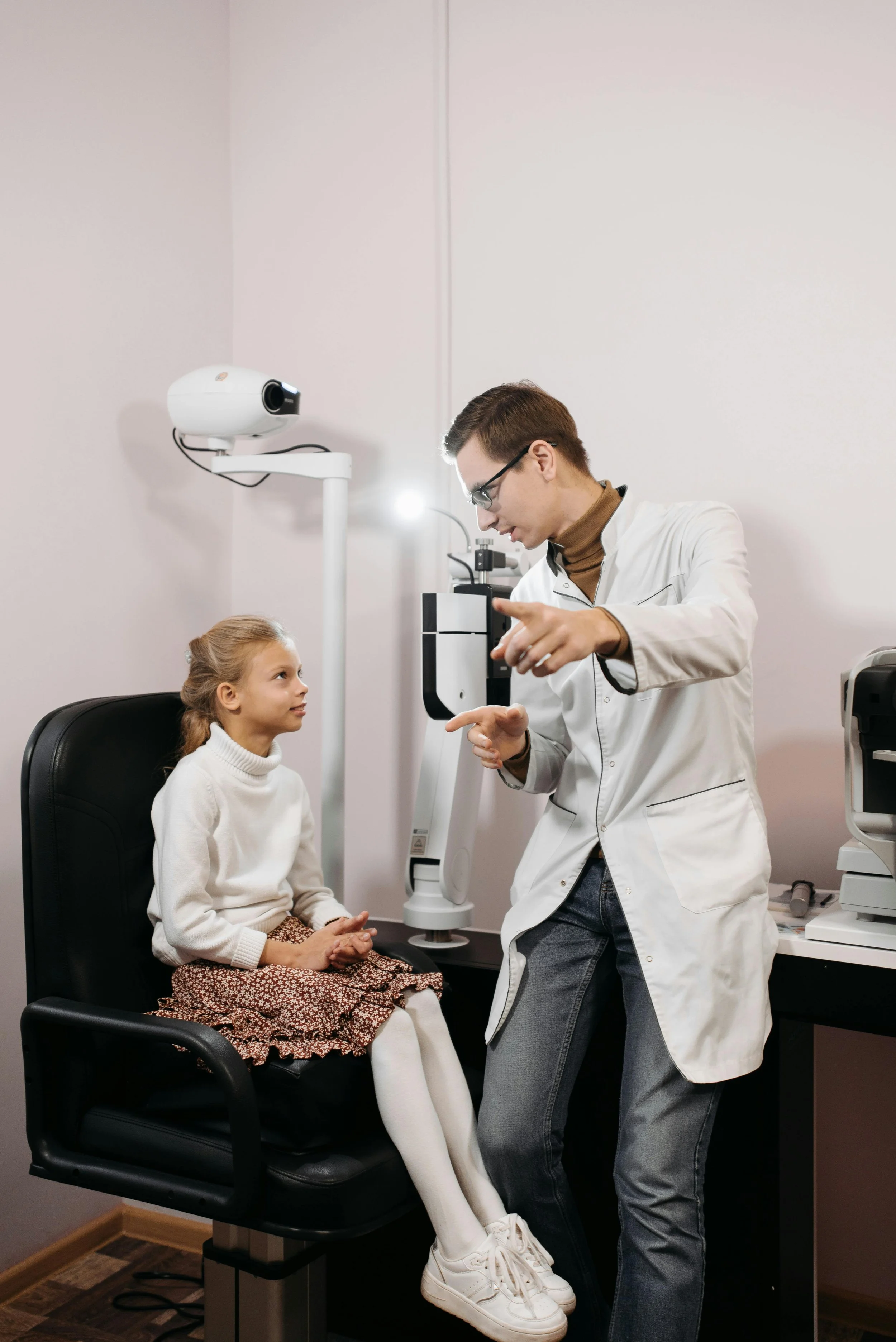
Even if your child shows NO signs, the American Academy of Ophthalmology recommends comprehensive eye exams:
First exam: Between ages 6-12 months
Second exam: Around age 3
Before starting kindergarten (age 5-6)
Annually once school-age, or as recommended by your eye doctor
DIFFERENCE BETWEEN SCREENING AND COMPREHENSIVE EXAM
Many schools offer vision screenings, which are helpful—but they're not the same as a comprehensive eye exam.
VISION SCREENING (School or Pediatrician):
Quick check (5-10 minutes)
Tests basic distance vision
May miss early myopia or other eye problems
Good for identifying kids who need further evaluation
Often done by school nurses or staff
Comprehensive Evaluation (Doctor’s Office):
Extensive (30-60 minutes)
Tests distance and near vision,
Eye health, and eye coordination
Can detect myopia even in young children
Performed by a licensed optometrist or ophthalmologist
Measures exact prescription and checks for eye diseases
Provides personalized recommendations
If your child "passes" a school screening but you still notice warning signs, schedule a comprehensive exam. Screenings can miss early or mild myopia.
Sources & References
All information on this page is drawn from trusted medical and research organizations. ClarityReach is committed to providing families with accurate, evidence-based education about recognizing myopia in children.
Primary Medical Authorities
-
American Academy of Ophthalmology (AAO) – Nearsightedness: What Is Myopia?
https://www.aao.org/eye-health/diseases/myopia-nearsightedness -
American Academy of Ophthalmology (AAO) – Myopia in Children
https://www.aao.org/eye-health/diseases/myopia-children -
American Academy of Ophthalmology (AAO) – Children's Eye Exams
https://www.aao.org/eye-health/tips-prevention/children-eye-exams -
American Optometric Association (AOA) – Myopia (Nearsightedness)
www.aoa.org/healthy-eyes/eye-and-vision-conditions/myopia -
American Optometric Association (AOA) – Children's Vision: 6 to 18 Years of Age
www.aoa.org/healthy-eyes/caring-for-your-eyes/children-vision -
National Eye Institute (NEI) – Nearsightedness (Myopia)
www.nei.nih.gov/learn-about-eye-health/eye-conditions-and-diseases/nearsightedness-myopia
Eye Exam Guidelines for Children
-
American Academy of Pediatrics (AAP) – Eye Examination in Infants, Children, and Young Adults
publications.aap.org/pediatrics/article/153/1/e2023064378 -
American Optometric Association (AOA) – Comprehensive Eye and Vision Examination
www.aoa.org/healthy-eyes/caring-for-your-eyes/eye-exams
Public Health Resources
-
Centers for Disease Control and Prevention (CDC) – Children's Vision Information
www.cdc.gov/vision-health/about/index.html -
Prevent Blindness – Children's Vision and Eye Health
preventblindness.org/children/