
What Is Myopia?
Myopia, also called nearsightedness, means a child can see things up close clearly but has trouble seeing objects far away. A classroom board, road sign, or presentation screen may look blurry, even when books or a phone screen look sharp.
How does it happen? Myopia usually occurs when the eye grows too long from front to back. When that happens, light doesn't focus correctly inside the eye, and distant objects appear blurry.
For many children, myopia starts quietly. They may not realize that what they're seeing is different from what others see, so the problem can go unnoticed without regular vision checks.
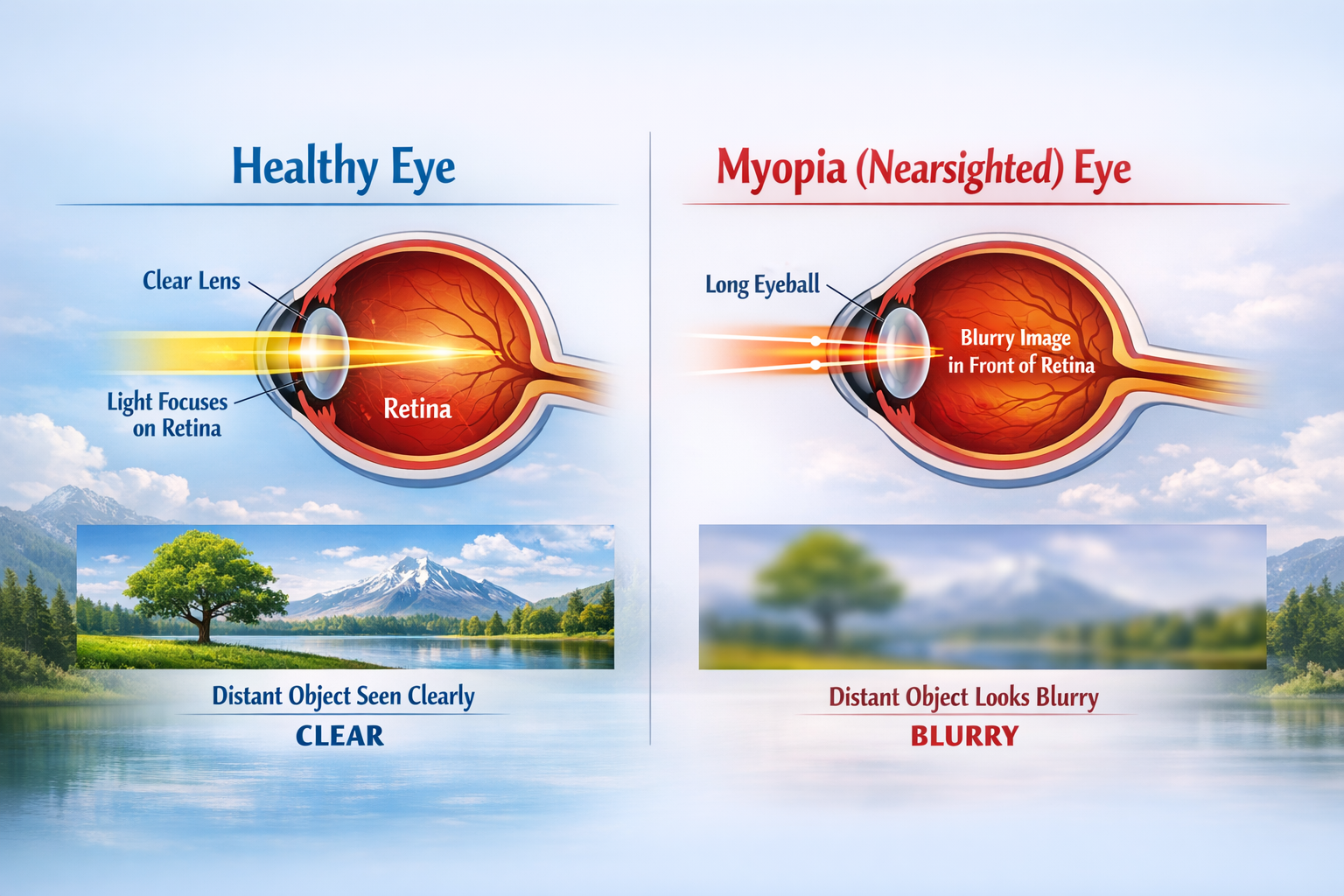
how the eye works
Understanding how the eye focuses light helps explain what goes wrong in myopia. This short video shows the key parts of the eye and how they work together.
American Academy of Ophthalmology | Closed captions available
WHY MYOPIA GETS WORSE IN CHILDREN?
Every event we host is designed with intention, from the atmosphere we create to the Because children's eyes are still developing, vision can continue to change as they grow. As children grow, the eye itself can continue to lengthen. For some children, this means their nearsightedness progresses each year. The progression is important because stronger myopia can increase the risk of more serious eye problems later in life. That makes early awareness and timely care especially important. Nearsightedness is often discovered in children between ages 8 and 12, and during the teenage years, when the body grows rapidly, myopia may become worse.
Understanding Nearsightedness (Myopia)
This video explains what myopia is, how it affects children's daily activities, and why early detection matters. Perfect for parents who want a quick overview.
American Academy of Ophthalmology | Closed captions available
THE GROWING PROBLEM: WHAT PARENTS SHOULD KNOW
Childhood myopia isn't just common—it's rapidly increasing worldwide. Understanding these trends helps families see why early awareness matters.
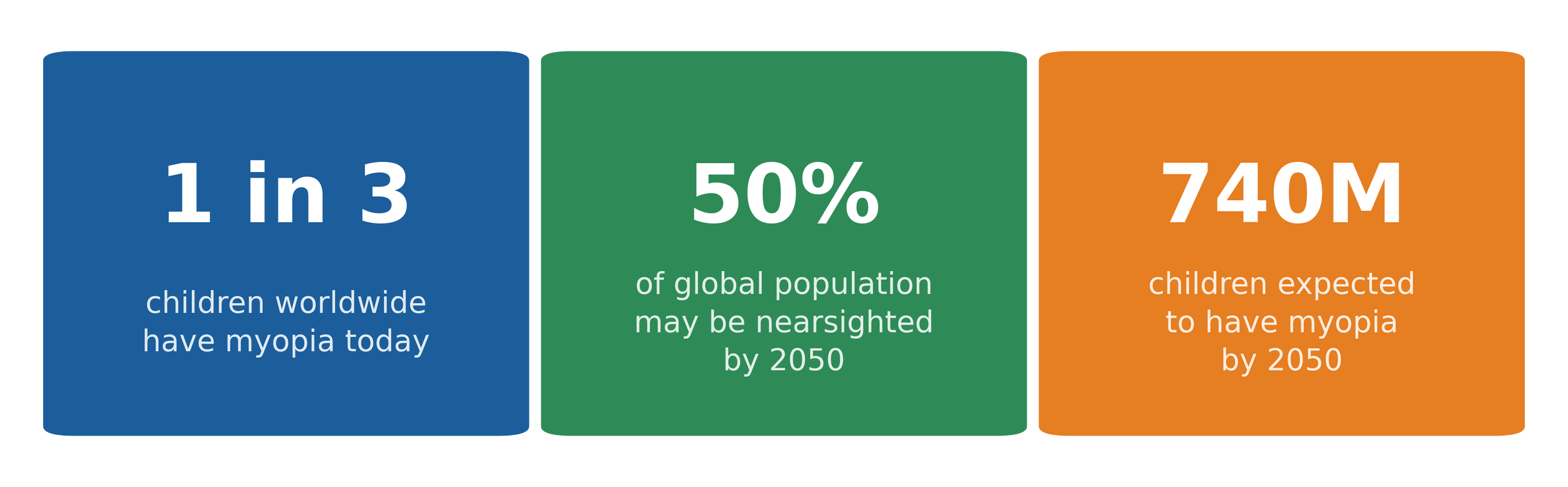
WHY EARLY DETECTION MATTERS?
The earlier a vision issue is identified, the earlier families can speak with an eye care professional about next steps. Early care gives families more time and more options.
WARNING SIGNS SHOULD WATCH FOR
Young children with myopia might not complain about blurry vision. Watch for these common signs that may indicate your child needs an eye exam:
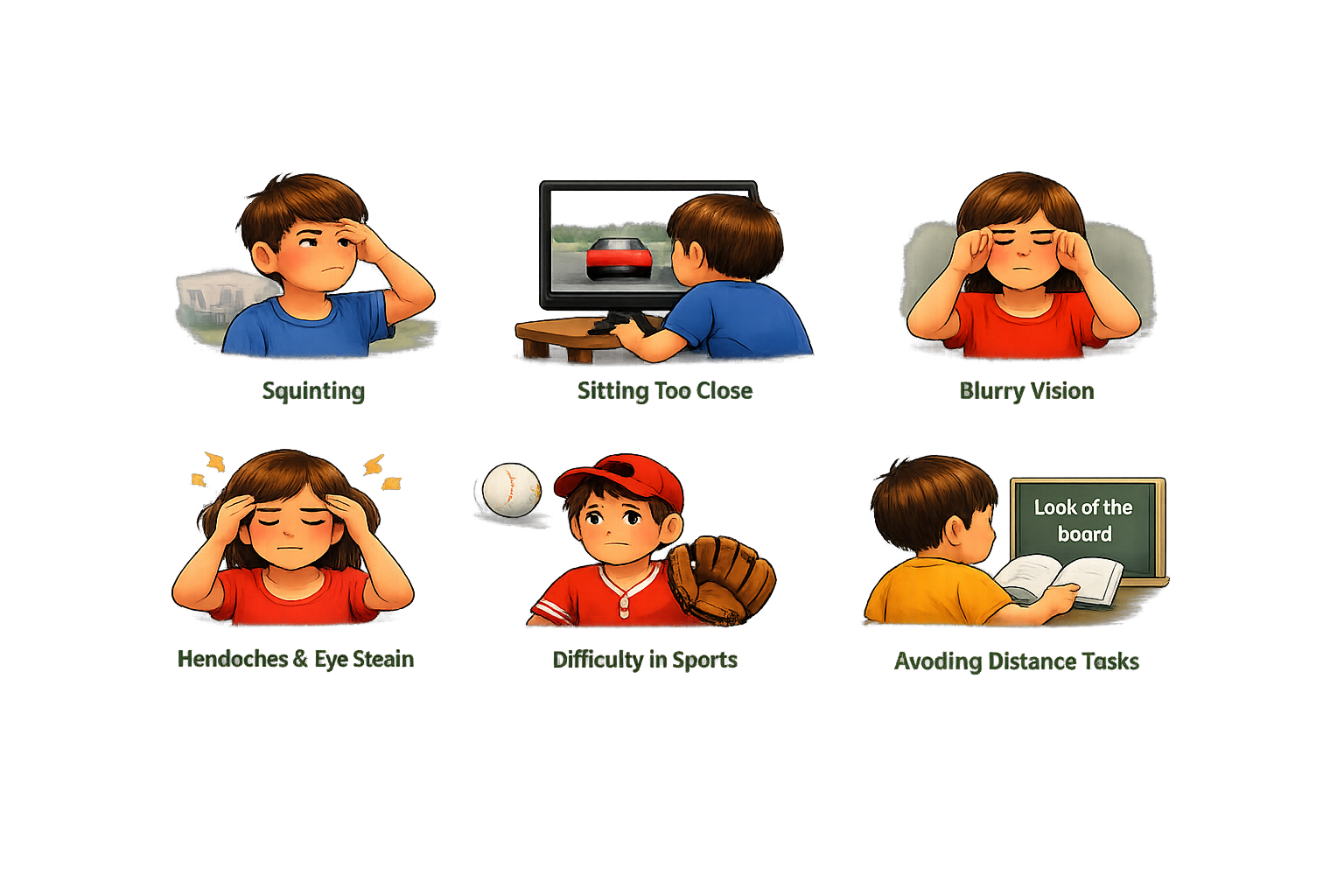
when to seek help
If you notice any warning signs, or if there's any concern about your child's distance vision, the next step is simple: schedule a comprehensive eye exam. A comprehensive eye exam is the best way to:
Confirm whether your child has myopia
Understand the current prescription
Track changes over time
Discuss treatment and management options
Eye doctors can detect myopia in children as young as 3-5 years old, even before they can read an eye chart.
Toddlers
Children
Is Detected
💡 REMEMBER: Eye exams are different from vision screenings at school. A comprehensive eye exam by a licensed optometrist or ophthalmologist provides the most complete picture of your child's eye health
WHAT FAMILIES CAN DO NOW
While we cannot reverse myopia, research shows simple lifestyle changes may help slow its progression in children. These steps support your child's vision and overall health. ALSO REMEMBER NEW TREATMENTS ARE OUT TO SLOW OR STOP THE MYOPIA
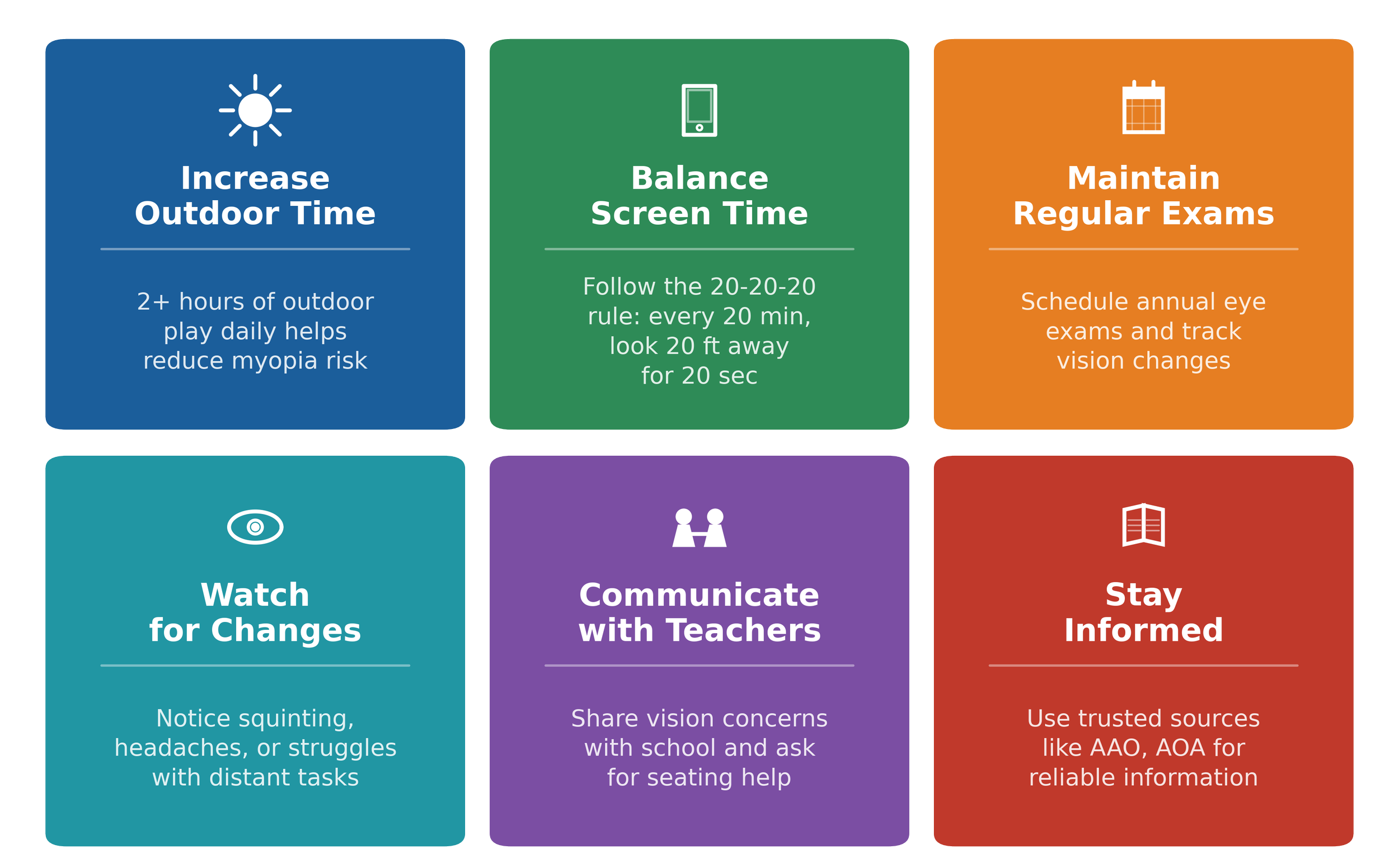
yOU'RE NOT ALONE IN THIS
Millions of families are navigating childhood myopia. With early awareness, regular eye care, and simple daily habits, you can support your child's vision and help them thrive in school, sports, and life. ClarityReach is here to help families understand myopia and take action early—because every child deserves clear vision and a bright future.
Thank you for taking the time to learn about childhood myopia. Your awareness makes a difference.
SOURCES & REFERENCES
All information on this page is drawn from trusted medical and research organizations. ClarityReach is committed to providing families with accurate, evidence-based education about childhood myopia.
-
American Academy of Ophthalmology (AAO) – What Is Nearsightedness (Myopia)?
https://www.aao.org/eye-health/diseases/myopia-nearsightedness -
American Academy of Ophthalmology (AAO) – How to Prevent Myopia from Worsening
www.aao.org/eye-health/tips-prevention/how-to-prevent-myopia-worsening -
American Academy of Ophthalmology (AAO) – Eye Health Educational Videos and Downloadable Resources
www.aao.org/eye-health/diseases/myopia-print-download-videos-infographics-poster -
American Optometric Association (AOA) – Myopia (Nearsightedness)
www.aoa.org/healthy-eyes/eye-and-vision-conditions/myopia -
American Optometric Association (AOA) – Children's Vision and Eye Exam Recommendations
www.aoa.org/healthy-eyes/caring-for-your-eyes/children-vision -
National Eye Institute (NEI) / National Institutes of Health – Nearsightedness (Myopia)
www.nei.nih.gov/learn-about-eye-health/eye-conditions-and-diseases/nearsightedness-myopia -
IAPB Vision Atlas – Myopia: Global Magnitude and Trends
www.iapb.org/learn/vision-atlas/magnitude-and-projections/myopia/ -
British Journal of Ophthalmology (2024) – Global prevalence of myopia in children and adolescents from 1990 to 2050
bjo.bmj.com/content/early/2024/03/12/bjo-2023-324600 -
World Health Organization (WHO, 2019) – World Report on Vision
www.who.int/publications/i/item/9789241516570 -
American Academy of Pediatrics (AAP) – Eye Examination in Infants, Children, and Young Adults
publications.aap.org/pediatrics/article/153/1/e2023064378 -
Centers for Disease Control and Prevention (CDC) – Children's Vision Information for Parents
www.cdc.gov/vision-health/about/index.html